
Roosevelt County Arrest Records
Arrest records in Roosevelt County come from law-enforcement and detention activity. The Sheriff's Office, Portales Police Department, and other agencies may create reports or custody entries when a person is arrested. The Roosevelt County Detention Center can confirm current custody information, while police and sheriff records may be requested through the right law-enforcement channel when release is allowed. Those arrest records do not prove guilt and do not always show the final court outcome.
Court charges after arrest are narrower and more formal. They come from the complaint, information, indictment, or citation filed with the court. The District Attorney prosecutes many Roosevelt County charges in the Ninth Judicial District, and the charge record becomes part of the case file in District Court, Magistrate Court, or Portales Municipal Court. Current jail custody and booking questions belong with Roosevelt County inmate records, while pleas, verdicts, disposition, and sentencing belong with Roosevelt County criminal court records.
The Roosevelt County Sheriff's Office page gives the local law-enforcement contact point for arrest reports, sheriff services, and warrant-related links.
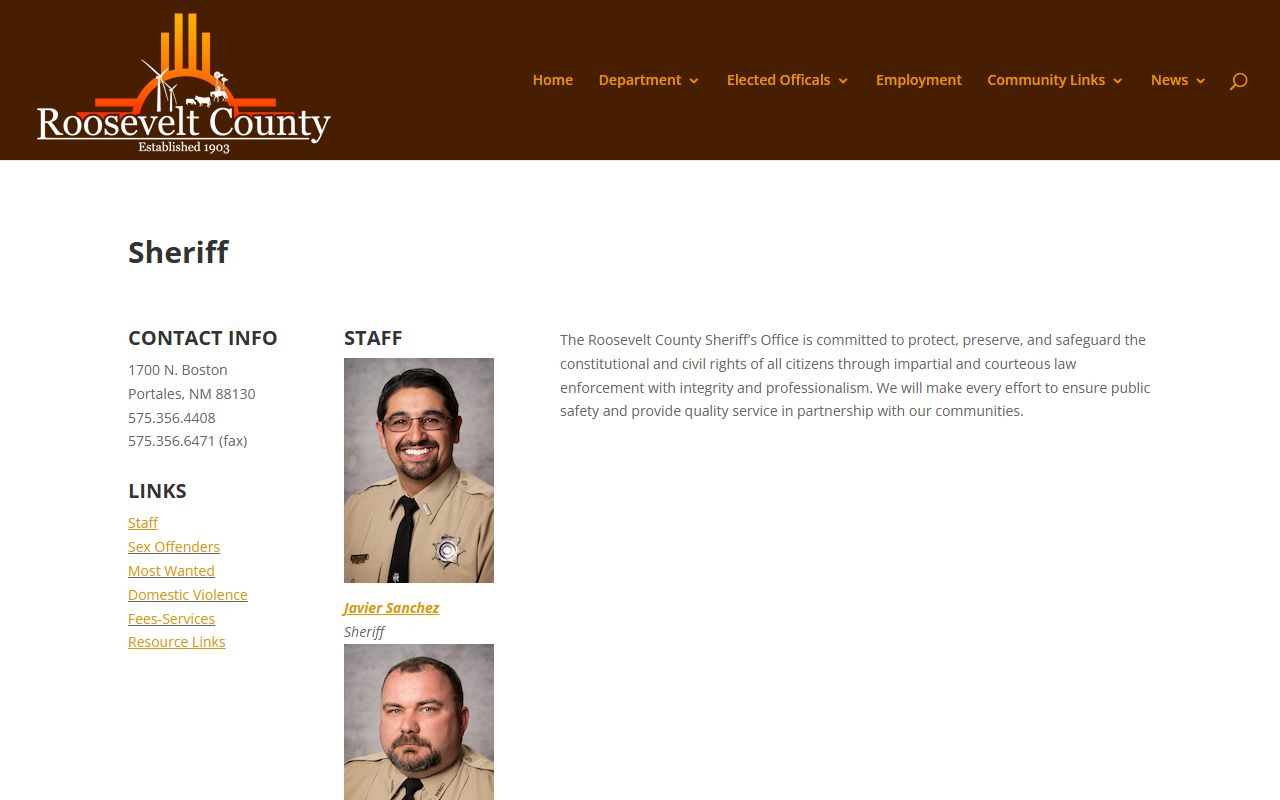
The sheriff source is important for arrest-side records because police reports and sheriff records are not maintained by New Mexico Courts IPRA.
Find Roosevelt County Charges After Arrest
Start by deciding whether the need is arrest information, current custody, filed charges, or the final criminal case result. Arrest and incident reports use sheriff or police channels. Current custody uses the detention center. Filed charges use court records. The court file may be searched through New Mexico Case Lookup, re:SearchNM, in-person clerk inspection, or the New Mexico Courts IPRA form when a specific criminal case document is needed.
- Use the arresting agency or detention center if the question is booking, custody, bond routing, or report availability.
- Search Case Lookup for individual electronic court records once a case number, defendant name, court, or date is known.
- Review the filed charge list, including charge name, statute or ordinance, severity, filing court, and any amended counts.
- Use the District, Magistrate, or Municipal Court clerk for copies, certifications, or missing case details.
- Use county IPRA or NextRequest for sheriff or county records, and use court IPRA for court case documents.
The courts state that they do not conduct criminal background checks for the public and do not maintain law-enforcement records. That means a background check, police report, jail status check, and court charge search can all produce different results for the same person.
The Sheriff's fees and services page lists report-copy and fingerprinting services that may matter when arrest records are requested from law enforcement.
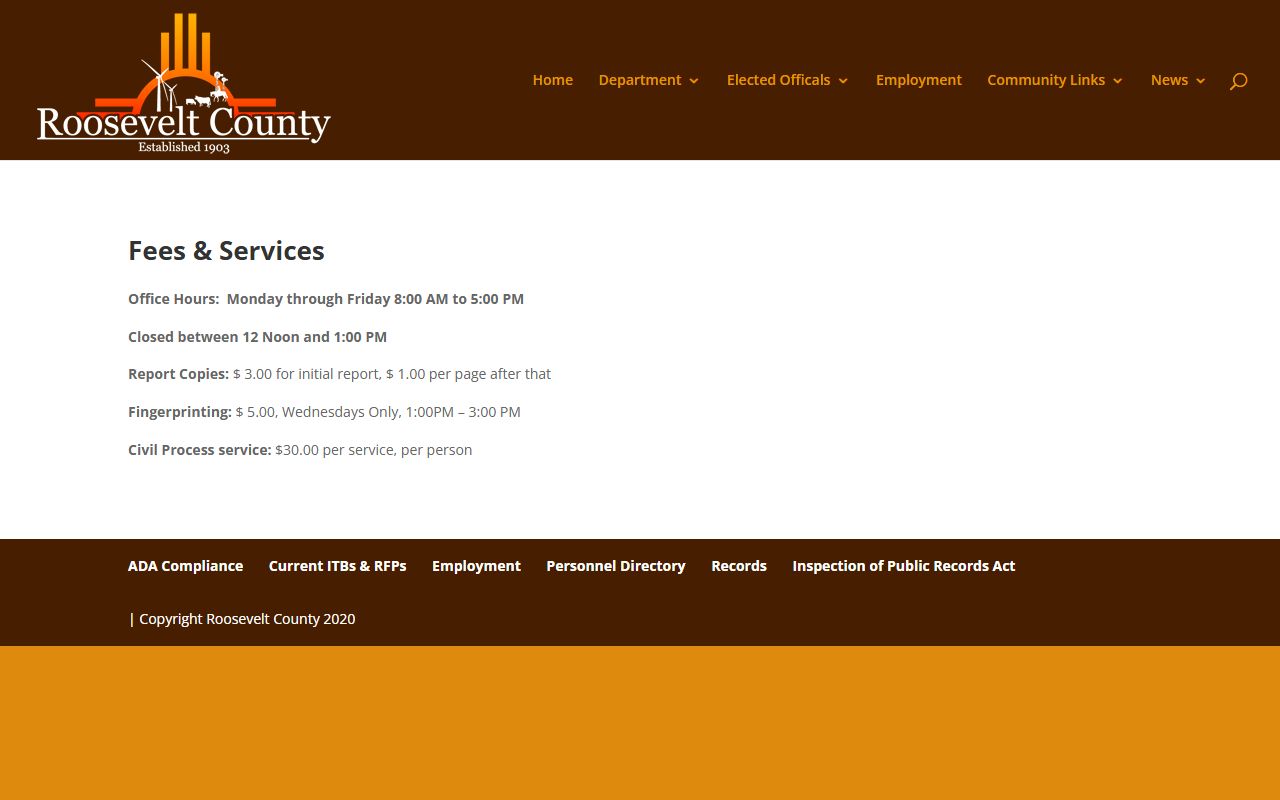
The sheriff fee schedule supports the distinction between a law-enforcement report copy and a court charge document.
Roosevelt County Charging Documents
Charges after arrest become part of the court record when a formal charging document or citation is filed. A criminal complaint may start a misdemeanor case or support early felony proceedings. An information is a prosecutor-filed charging document often used for felony charges. An indictment is tied to grand-jury action. The exact path depends on the charge, court, and prosecutor decision.
| Document | Who files or creates it | How it fits Roosevelt County court charges |
|---|---|---|
| Criminal complaint | Law enforcement or prosecutor | Alleges an offense and can begin the court charge record, especially in misdemeanor or preliminary matters. |
| Information | District Attorney | Formal prosecutor-filed accusation used in many felony cases after review or preliminary proceedings. |
| Indictment | Grand jury | Formal accusation following grand-jury action, often tied to more serious felony prosecution. |
| Citation | Officer or enforcement agency | Can begin traffic, DWI/DUI, municipal, or misdemeanor court processing depending on the offense. |
The Ninth Judicial District Attorney serves Curry and Roosevelt Counties. Research identifies Quentin Ray as the District Attorney and the Roosevelt County DA office at 205 South Main Ave. in Portales. Prosecutor decisions can add, reduce, amend, or dismiss charges before the case reaches final disposition.
The Portales Police Department page documents the city law-enforcement office tied to some local arrest and report records.
City police records can be relevant when the arrest or incident began with Portales Police rather than the county sheriff.
Roosevelt County Charge Status
A charge record is not static. A case may start with one set of allegations, then change through plea talks, prosecutor review, motion practice, or court orders. A person may be arrested on one allegation, charged with a different count, or have several counts resolved in different ways. The current status should be checked against the docket and final disposition.
| Status | What it means | Why it matters |
|---|---|---|
| Pending | The charge is still open and has not reached final disposition. | Search results may change after hearings, plea talks, or trial. |
| Amended | The charge was changed after filing. | The original arrest allegation may differ from the current court count. |
| Reduced | A more serious count was changed to a less serious count. | The final disposition may not match the booking or complaint language. |
| Dismissed | The court record shows a count or case was ended without conviction on that count. | Dismissal terms affect whether refiling is possible. |
| Expunged or sealed | Public access has been limited by law or court order. | An absent public result does not prove no arrest or charge ever existed. |
Charge records should be read count by count. One case can include several charges with different outcomes, fines, jail terms, probation conditions, or dismissal dates.
Charge Records vs Convictions
Roosevelt County arrest records and court charges should not be described as convictions unless the court record shows a guilt-based final outcome. A charge means the state or municipality accused a person of an offense. A conviction means a plea, verdict, or judgment resolved the charge as guilty. This distinction is critical for employers, housing, licensing, immigration, and personal review, but those uses may be subject to separate law.
| Question | Charge record | Conviction record |
|---|---|---|
| What is it? | The filed accusation after arrest, citation, complaint, information, or indictment. | The final guilt-based result after plea, verdict, or judgment. |
| Can it change? | Yes, it can be amended, reduced, dismissed, or replaced. | Yes, but usually through appeal, correction, post-judgment order, or expungement. |
| Where to confirm? | Charging document and docket entries. | Judgment, sentence, disposition, and certified court copy. |
Roosevelt County Arrest Record Channels
Law-enforcement report copies and accident reports do not come from the court clerk. The Sheriff's Office fees page lists office hours Monday through Friday, 8:00 a.m. to 5:00 p.m., closed noon to 1:00 p.m. It lists report copies at $3.00 for the initial report and $1.00 per page after. Fingerprinting is listed at $5.00 on Wednesdays only, 1:00 p.m. to 3:00 p.m. Civil process service is listed at $30.00 per service, per person.
Portales Police Records has a separate route for police reports, accident reports, and public records requests. County administrative or sheriff records can be requested through Roosevelt County IPRA instructions or NextRequest when the record is public. Some arrest-related information can be withheld or redacted when it involves juveniles, active investigations, safety concerns, sealed court orders, or protected personal information.
The Portales Police Records page is the city source for police report, accident report, and public-record request links.
That city records source matters for arrests or incidents handled by Portales Police rather than the county sheriff.
Statewide Criminal Record Limits
The New Mexico Department of Public Safety Law Enforcement Records Bureau is not the same as the Roosevelt County court clerk. DPS material covers topics such as sex offender registry, expungements, fingerprint and background units, and SORNA contact channels. Court charge records come from case filings, while law-enforcement record products or background checks follow separate state procedures and release rules.
New Mexico's Criminal Record Expungement Act allows qualifying individuals to petition to expunge certain arrest, criminal, and public records. New Mexico Courts also explains cannabis automatic expungement and other charge or conviction expungement paths. If a charge was dismissed, reduced, sealed, or expunged, public search tools may show less than the full internal history.
The New Mexico DPS Law Enforcement Records Bureau page is the state law-enforcement records source for background, fingerprint, registry, and expungement topics.
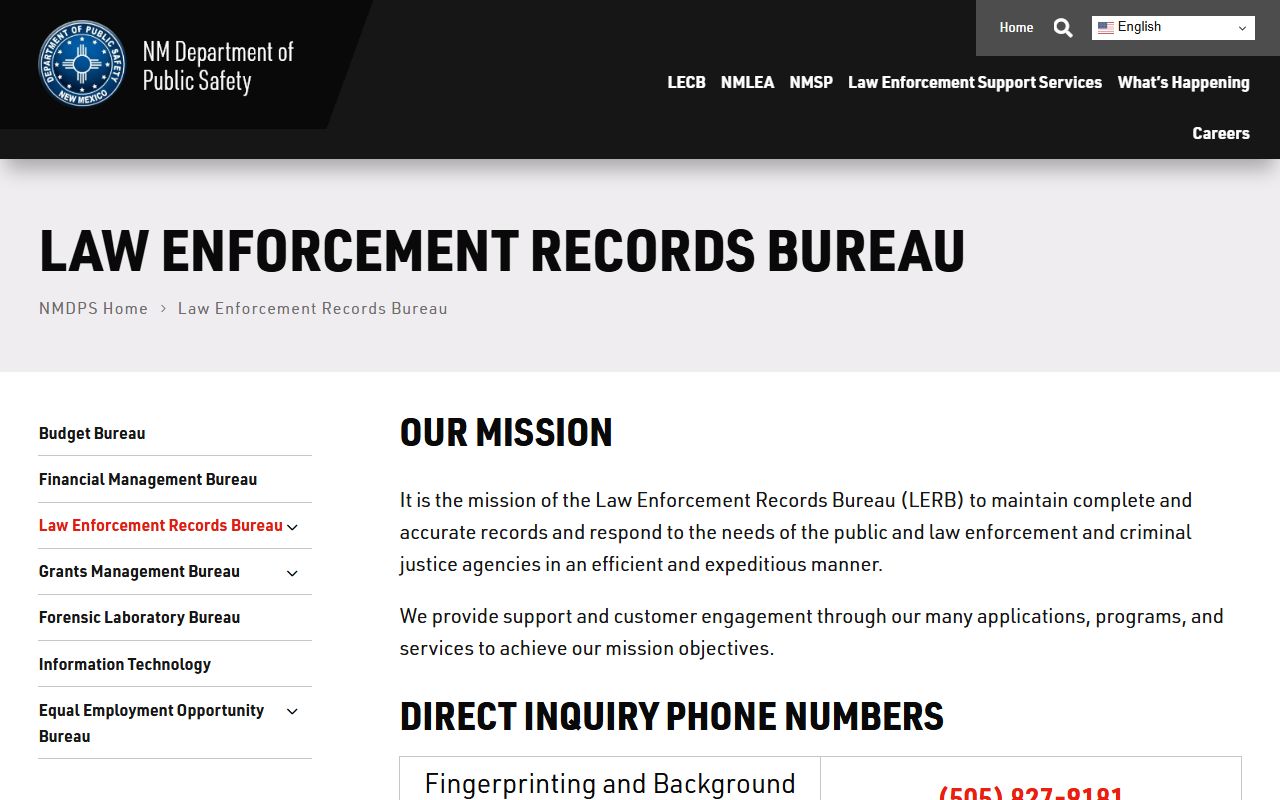
The DPS source helps separate statewide law-enforcement records and expungement topics from Roosevelt County court charge files.
Restricted Roosevelt County Charge Records
Restricted charge records include juvenile and Children's Court material, sealed or expunged charges, active search-warrant details, protected victim information, and records with personal identifiers. re:SearchNM Tier 2.1 access for delinquency proceedings requires special application and non-disclosure terms, so public users should not assume youth records are open. Court copies may also redact Social Security numbers, financial account numbers, medical information, minor identifiers, and protected addresses.
When a charge is not found online, the reason may be ordinary rather than dramatic. The case may be in another court, entered under a different spelling, older than the electronic index, not yet filed, sealed, expunged, or still a law-enforcement record rather than a court case. The practical next step is to identify the arresting agency, the court named on the citation or notice, and whether the person is currently in custody.
Note: A jail or arrest record can point to charges, but the court record controls the filed charge status and final outcome.